Hotel Card Holder Switch for automation system integration
Simplify Access. Maximize Control.
In today’s smart environments, complexity is often the biggest obstacle. Traditional hotel card switch holders rely on RFID technologies, voltage requirements, and proprietary systems — making integration difficult for modern smart homes and PLC-based automation.
Introducing the Mechanical Hotel Card Holder Switch — a simple, reliable, and integration-friendly passive card holder switch designed specifically for smart system professionals.
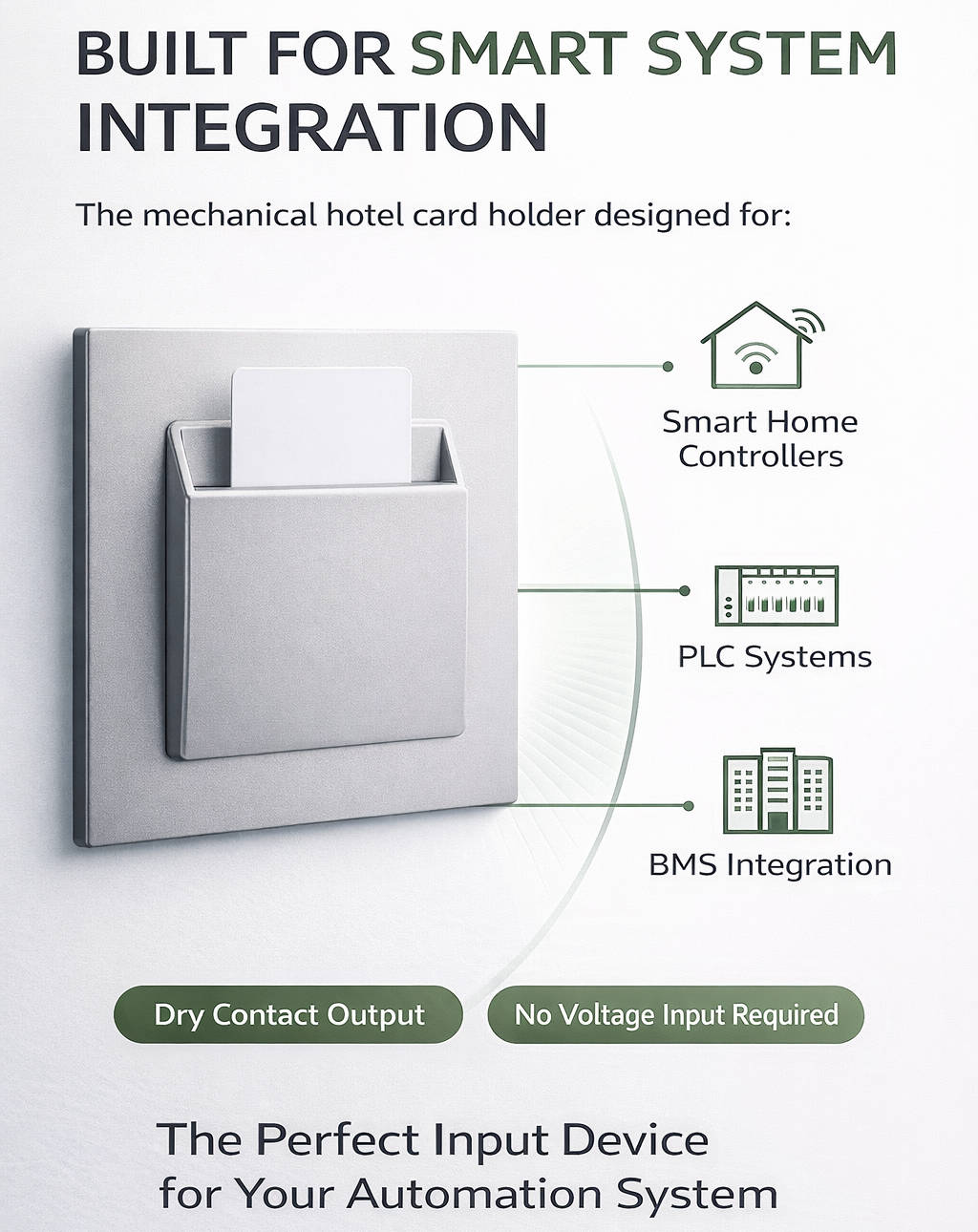
Designed for Smart Integration
Unlike RFID-based card holders, this solution uses a pure mechanical switch mechanism. No frequency compatibility issues. No signal interference. No unnecessary electronics.
Just insert a card — and the system responds instantly.
This makes it ideal for:
Smart home integrators
KNX/EIB smart home automation system
PLC automation systems
Building management systems (BMS)
Custom IoT solutions
Features
No Power Required
Dry Contact Card Holder Switch
Suitable for Low Voltage System
Integration-Ready Card Switch
Key Features:
Universal Card Compatibility
Works with any card size — hotel cards, membership cards, or even custom placeholders. No RFID dependency.
Dry Contact Output
Provides clean, voltage-free switching (dry contact), making it easy to connect to:
Smart home controllers
PLC inputs
Relay modules
Low-voltage automation systems
No Power Required
Unlike traditional 230VAC units, this device:
Requires no external power supply
Eliminates wiring complexity
Reduces installation cost
Instant Response
Pure mechanical action ensures:
Zero latency
High reliability
Long operational life
Clean & Minimal Design
Modern, neutral aesthetics that fit:
Hotels
Serviced apartments
Smart homes
Offices
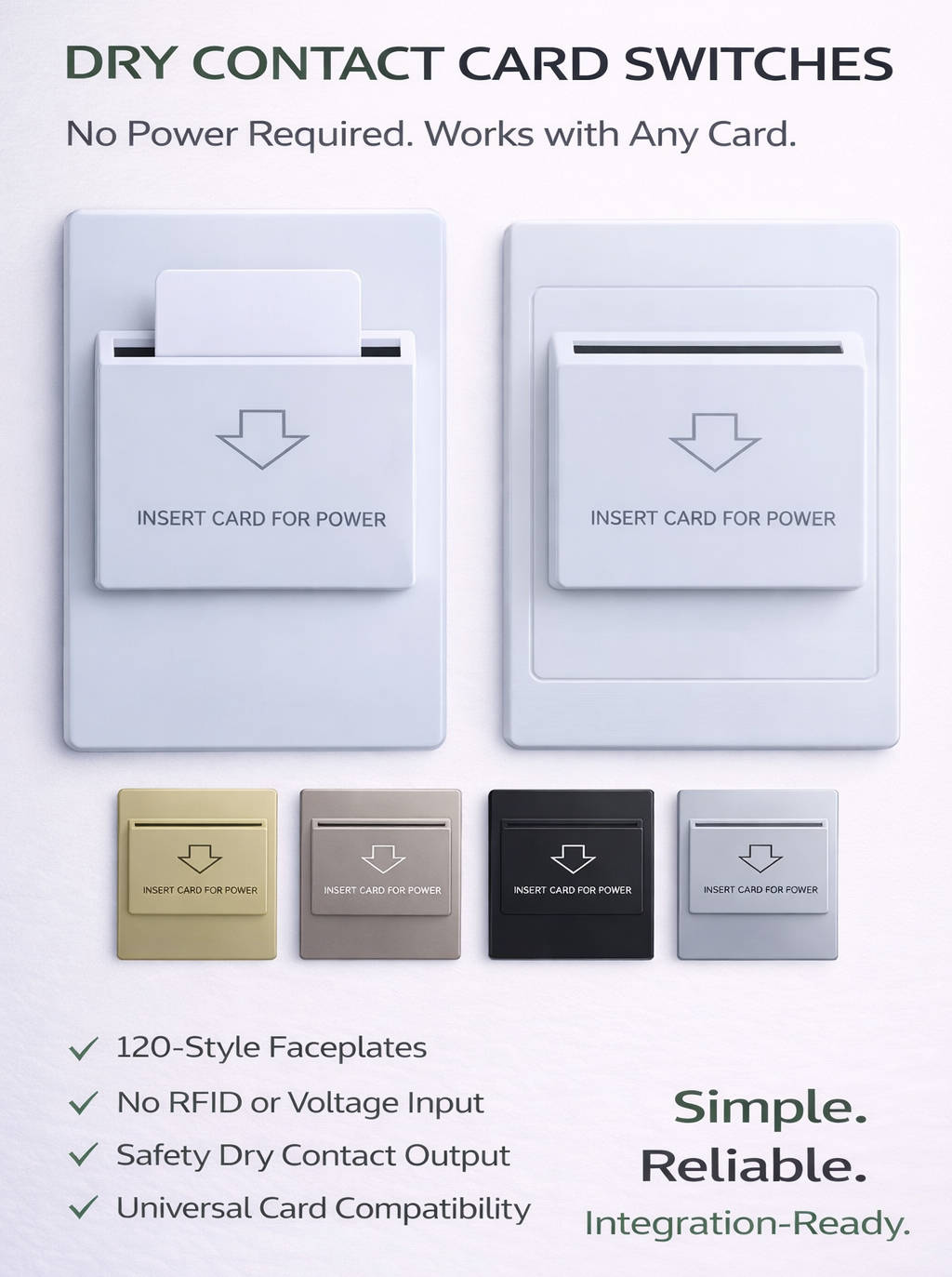
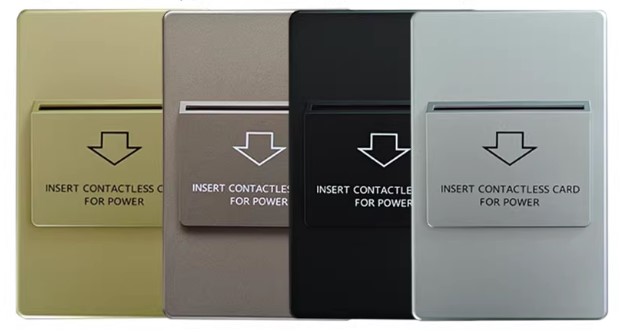
4 Colours to Choose from
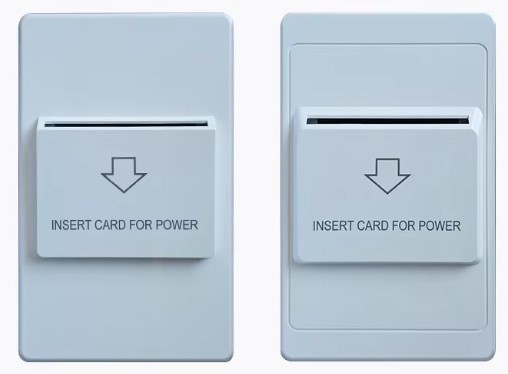
Classic White
Matte Black
Champagne Gold
Silver Grey
4 colours to choose from (mechanical card holder switch 86 x 86mm faceplate)
Dimension of Card Holder
Standard 86x86mm socket
Also available in 120 type style faceplate
Style: 120 type faceplate
Custom Logo & Text
Faceplate customisation is available. Please contact us with your designed layout.
Perfect for Smart Systems
This product is built with system integrators in mind.
Seamless Integration Examples:
Trigger lighting scenes via smart controller
Enable HVAC systems when card is inserted
Activate energy-saving modes when removed
Interface directly with PLC digital inputs
🏗️ Ideal Applications
Smart homes
Boutique hotels
Airbnb / serviced apartments
Office energy-saving systems
Industrial control environments
💡 A Smarter, Simpler Choice
When your system already has intelligence, you don’t need more electronics — you need reliable input.
This mechanical card holder gives you exactly that:
No compatibility issues
No unnecessary complexity
Just clean, dependable switching
📦 Product Summary
Type: Mechanical card holder switch
Output: Dry contact (NO/NC options available)
Power: Not required
Compatibility: Universal card support
Installation: Standard wall box
🚀 Ready to Integrate?
Upgrade your projects with a solution designed for simplicity, flexibility, and reliability.
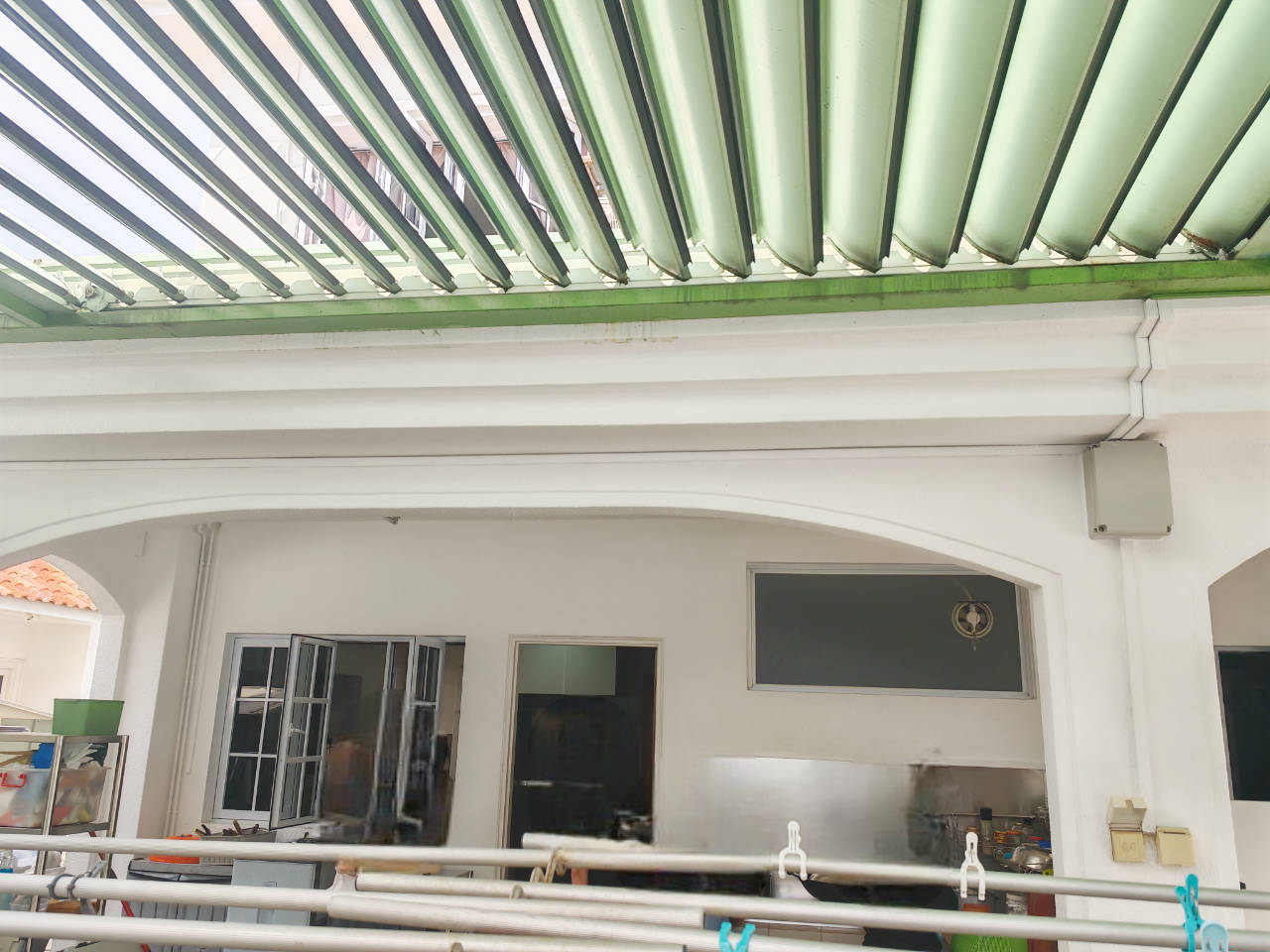
An Automated Trellis Shade Control System is becoming increasingly popular in Singapore due to the city’s hot climate, strong sunlight, and frequent sudden rain. These systems feature a smart roof structure—typically built with aluminium louvers or retractable fabric—that can open or close automatically depending on weather conditions.
The trellis is powered by a motorised mechanism that allows the louvres or fabric panels to turn open for ventilation or sunlight and close completely for protection. When the system is in the sun shade position, it reduces heat gain on balconies, patios, and rooftop terraces.
Because the system is automated, it can operate on its own without user input. Sensors monitor environmental conditions, and the trellis will auto-close when rain is detected. This is especially useful in Singapore, where showers often come unexpectedly. At the same time, the roof can open automatically when conditions are safe, allowing airflow and natural daylight.
Trellis is an alternative to an awning for those who prefer a solid structure that can withstand wind and rain.
Key Features
Automated open/close control through remote, wall switch, or mobile app
Weather sensors that trigger auto-close when it rains
Adjustable louvre angles that let users turn open the roof partially or fully
Effective sun shade during peak afternoon heat
Strong, durable structure suitable for tropical climates
Why It’s Ideal for Singapore
Outdoor living spaces in Singapore—from HDB balconies to landed patios—benefit greatly from flexible weather control. An automated trellis enhances comfort by blocking heat, keeping areas dry, and providing a reliable shade solution that adapts instantly to changing skies.
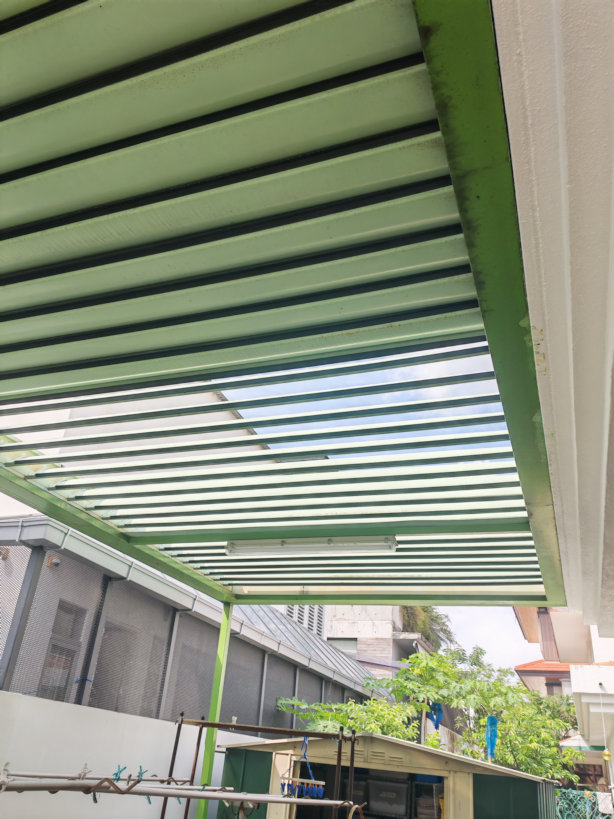
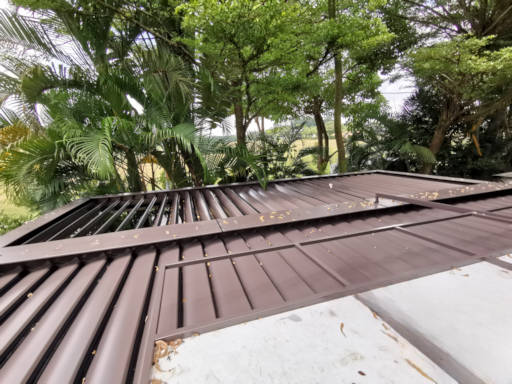
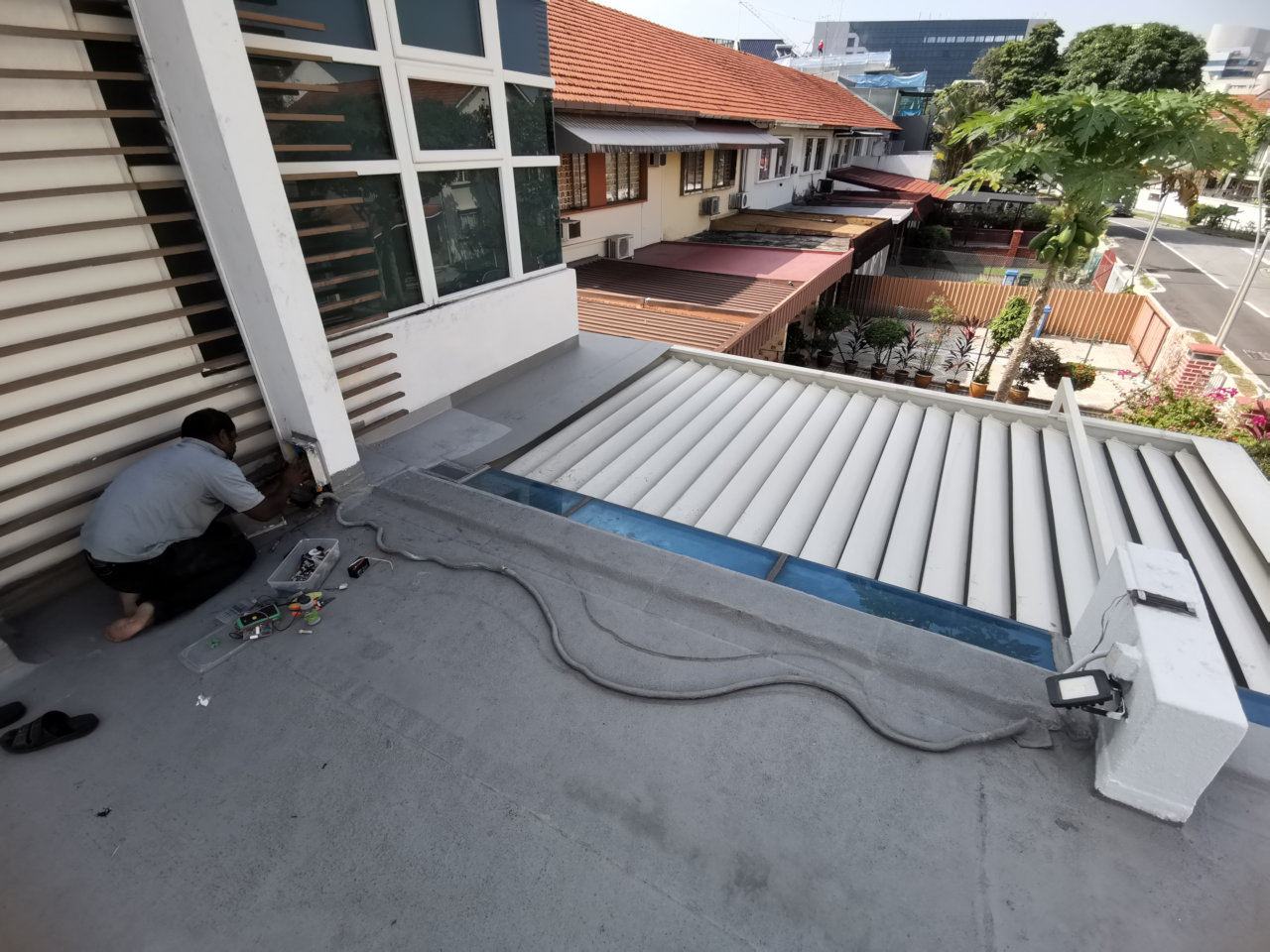
Project 1
by Sunshade Trellis System Pte. Ltd. (Singapore)
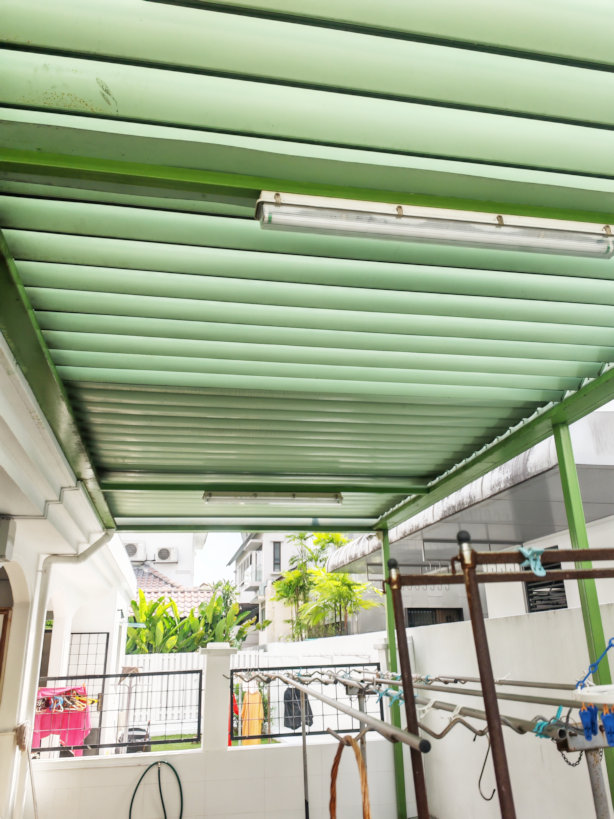
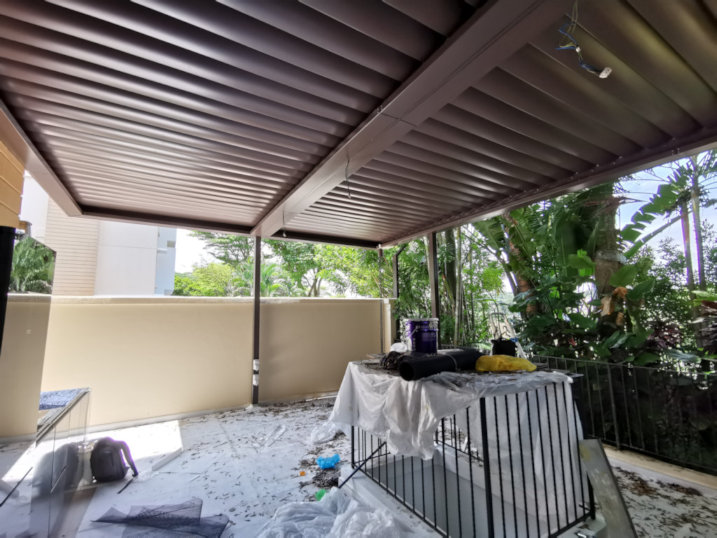
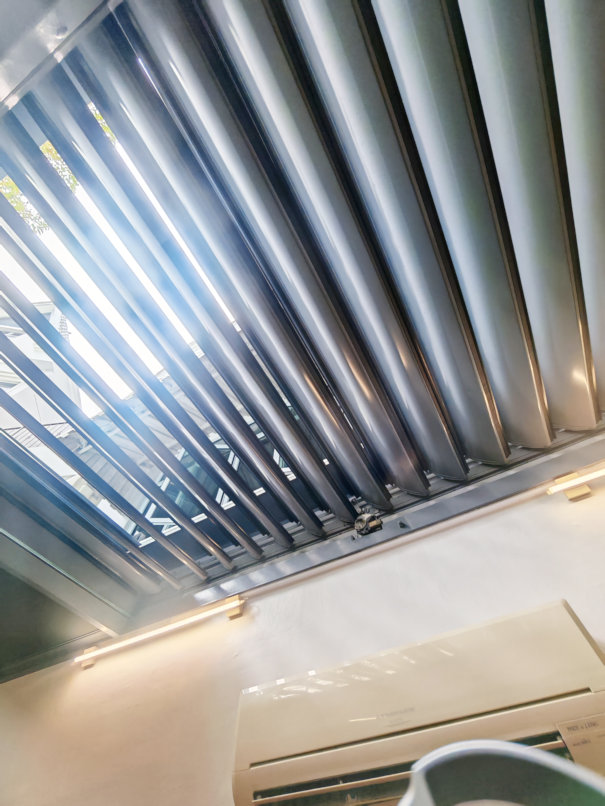
Project 2
by Sunshade Trellis System Pte. Ltd. (Singapore)
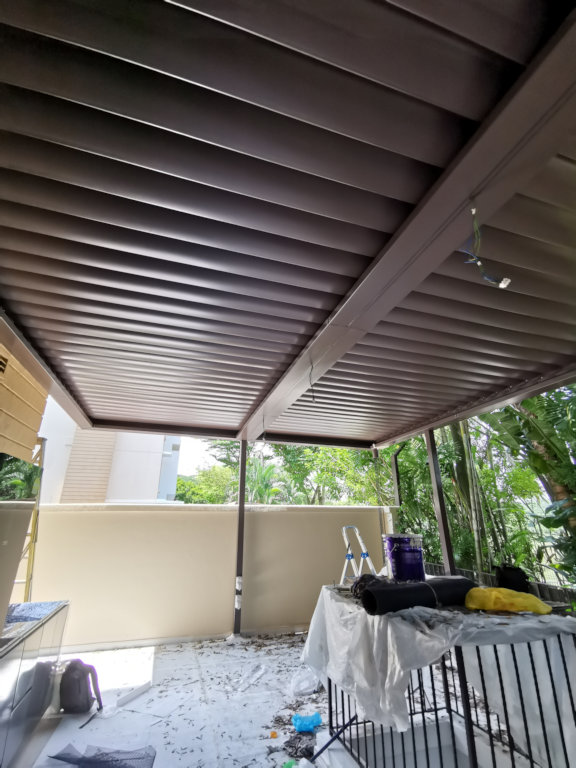
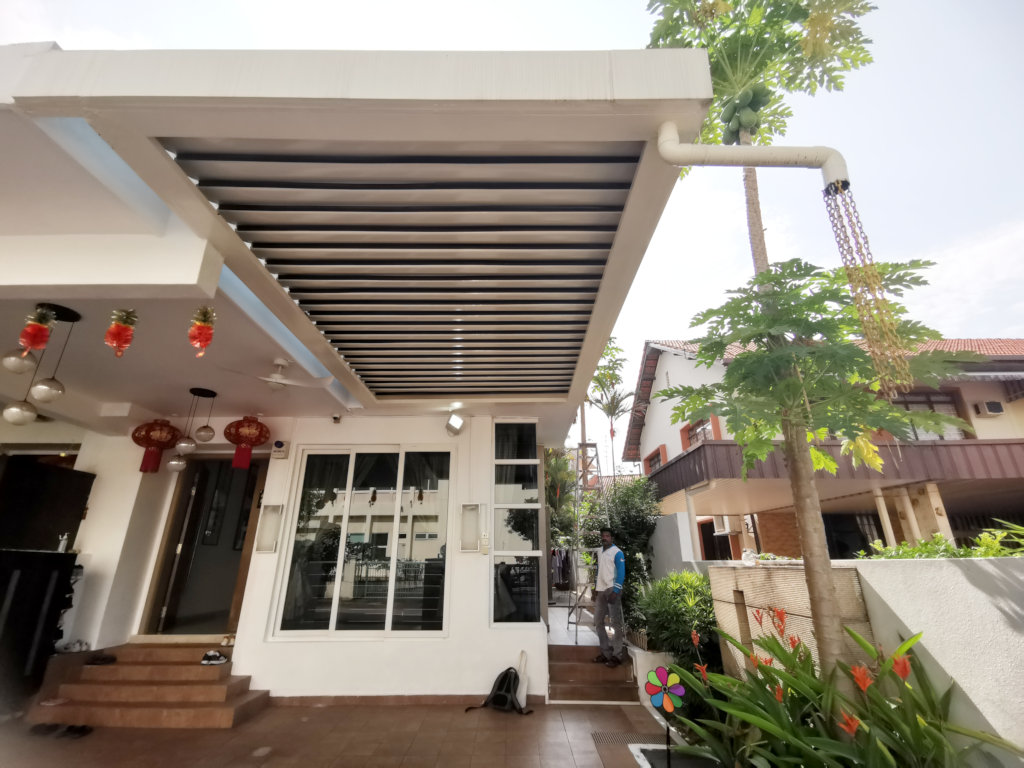
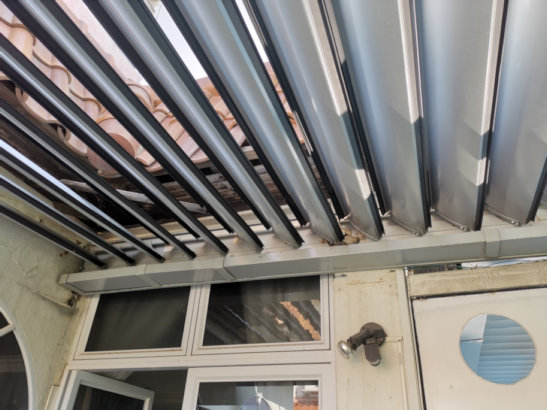
Project 3
by Sunshade Trellis System Pte. Ltd. (Singapore)
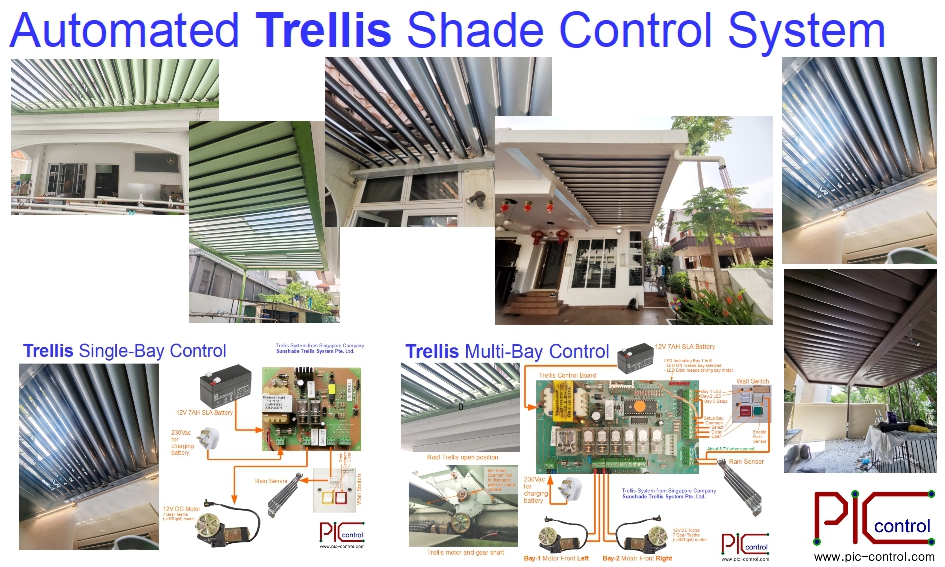
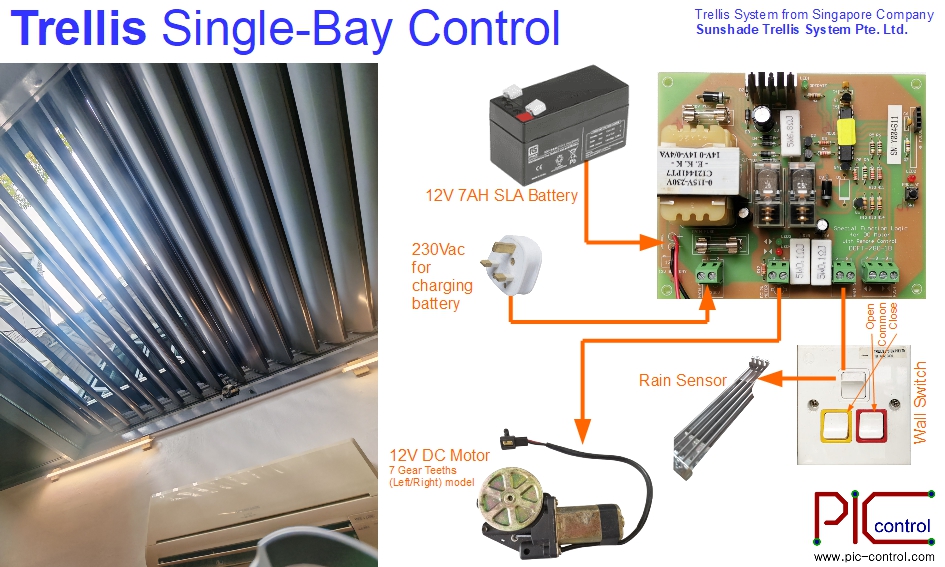
Trellis Single-Bay Control Board
Single-Bay Trellis control board from Sunshade Trellis System Pte. Ltd. (Singapore)
This control board provides the control for a single bay roof Trellis system. It can be identified from the 3 switches user control wall-switch.
Trellis Single-Bay Control Board Wiring Schematic
The top button is a rain sensor enable switch. Switching it to the down position will enable rain sensing. The Trellis will automatically close the Trellis from it detects the rain.
The two lower buttons are for Trellis panel control.
The left (yellow) momentary switch is for opening the Trellis roof panel. A single quick press and release will activate the Trellis to open the roof panel fully. If this button is pressed (and held), the panel will turn to open and halt only when the button is released.
The right (red) momentary switch is for closing the Trellis roof panel. A single quick press and release will activate the Trellis to close the roof panel fully. Similar to the open button, when this button is pressed (and held), the panel will do the closing and halt only when the button is released.
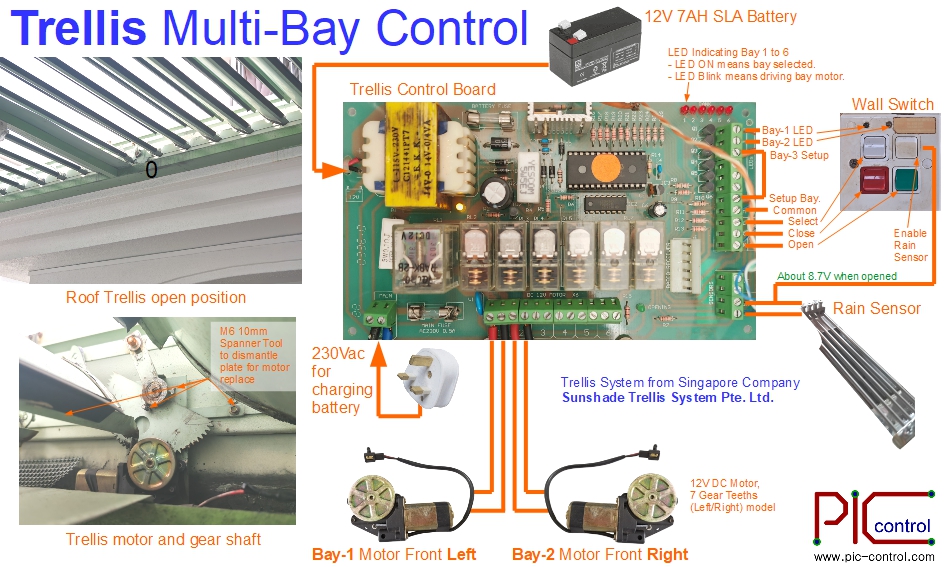
Trellis Multi-Bay Control Board
Multi-Bay Trellis control board from Sunshade Trellis System Pte. Ltd. (Singapore)
This multi-bay board provides the control for 2 or more roof Trellis bay systems. It can be identified from the 4 switches user control wall switch.
Trellis Multi-Bay Control Board Wiring Schematic
This multi-bay user interface is similar to the single-bay version. It has an extra switch on the top left corner of the user switch panel. This button selects the bay that you want to control. Press one time for bay number 1, press two times for bay number 2.
The selected bay can be seen from the LED indicator (turned on) on the switch panel. The LED, starting from the left, indicates bay number 1, 2, 3, all the way to bay 6, which is the maximum number of Trillis roof bays this board can support.
Only when a bay is selected can the open/close button function. A blinking LED indicates that the board is now driving the motor of the particular bay when the open/close button is pressed. The LED indicator on the circuit board will also be lit up, indicating the status of the operation.
Troubleshooting the controller board.
— To be updated soon —
Battery Replacement
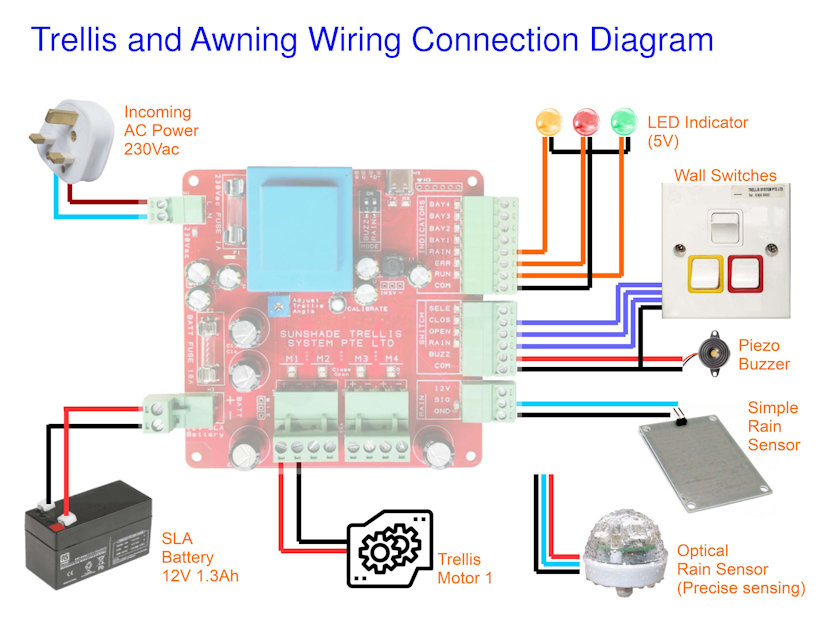
The system uses SLA (Sealed Lead Acid) battery as a means to drive the DC geared motor. Typical installation uses 12V 7Ah SLA battery. You can also use a smaller SLA battery rated 12V 1.3Ah.
These batteries can usually last for years, but they do wear off over time.
A typical full charge voltage measurement is expected to be between 13V to 13.8V. This is a healthly voltage level. When the voltage of the battery is measured below 12V, it is likely that the battery is worn and requires replacement.
Please handle the battery with care. Connect the correct polarity to the battery terminal. Please handle with care, and do not to short the positive (+) and the negative (-) terminal of the SLA battery, as it can catch fire instantly.
Motor Replacement
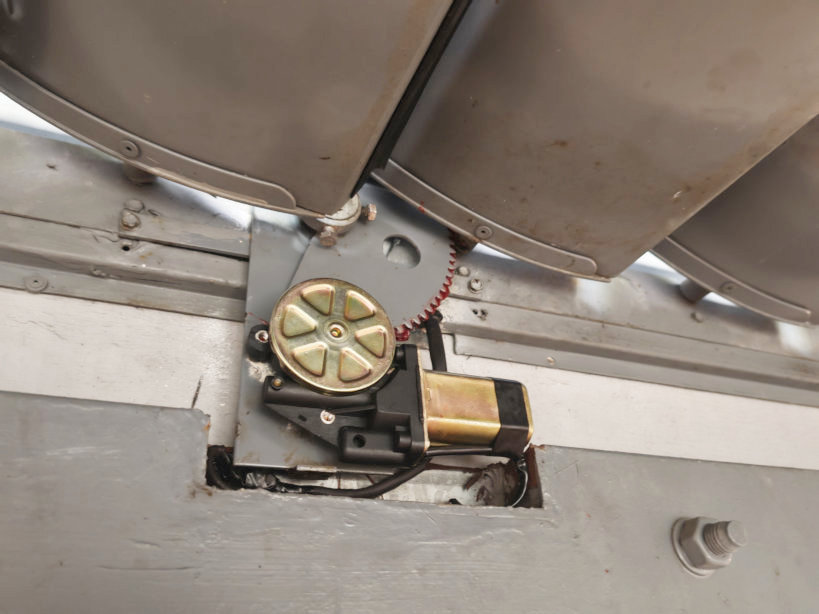
The motor used for this Trellis is a 12V geared DC motor (7 gear teeth version) that is typically used for the vehicle winding windows. It is important to note that there is a Left and Right versions of the motor.
The tools required to remove the motor panel is mainly a 10mm spanner and an Allen key set. The motor panel has to be dismounted in order for the motor to be replaced.
Trellis panel install calibration
These Trellis controllers are designed for simple installation without using any limit switch to set the motor motion boundary.
The Trellis calibrated position has its panel opened to 90 90-degree angle. At this angle, the gear teeth should be hitting the boundary limit stud. At the calibrated position, tighten the two M6 hex screw to lock the lever in position.
The panel’s closed position will naturally set the limit boundary. The panel will be closed tightly, resulting in a current surge which becomes an indicator for the controller to stop the motor.
Home
automation is getting more and more popular nowadays. Automation
simplifies our daily task in our home, making our life easy.
Home
automation may seems to be a science fiction or high tech stuffs that
most people will not be able to afford. In actual fact, it has already
penetrate into almost all our homes.
Nearly all
household in Singapore has some form of home automation. Washing
clothing used to be a chore in the past. The invention of a washing
machine automate the washing chores. Rice cooker, microwave and vacuum
cleaner appliances which has become a part of our daily life,
shortening our time to do household chores. Women in the past stay at
home to do house work, while the men work outside for an income.
Automation has helped to transform the women in today’s society,
allowing them to walk out of their house, joining the working force.
The doubling of the work force has significant contribution to an
economy. These invention that automate our home frees our time and
change our society in many many ways.
Home automation
has comes a long way and is still finding its way into our home. Our
current era is very much involved with information technology. Most of
the household have internet connectivity and it has becomes one of our
latest household utility besides our electricity, water, and telephone
bills.
The current home automation trend focus on
information connectivity of the home. The industry believes that
consumer wants a digital connection to control whatever a consumer have
at home. Providing the consumer with the power of control. These comes
in the form of remote lighting control, motorised curtain/blind
control, air-con/fan control or automated opening of door.
Green
environment and energy saving is another popular trend that pushed
home/office automation. The industry comes up with product integrated
with sensors that will automatic switches off lights when no one is
around, or maintaining a constant lighting intensity throughout the
day. Energy efficient automated solution is also a popular theme.
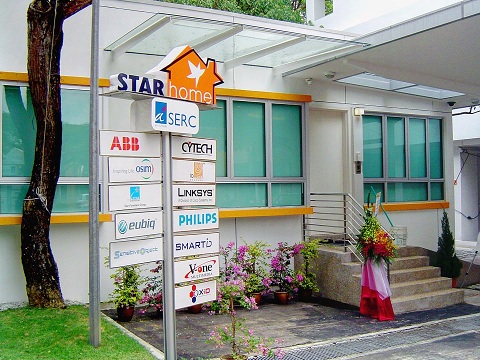
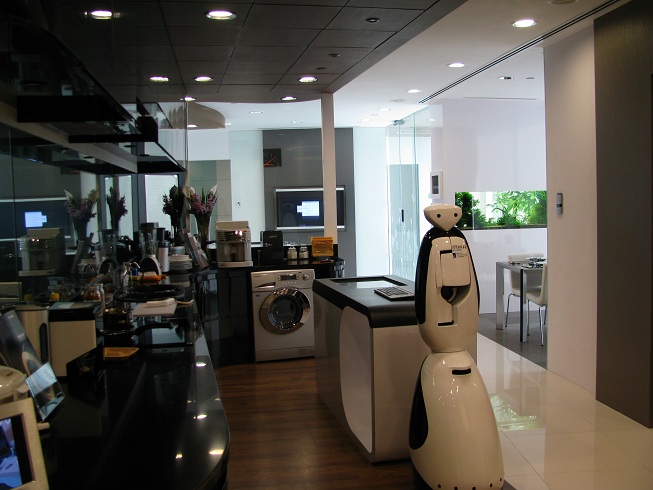
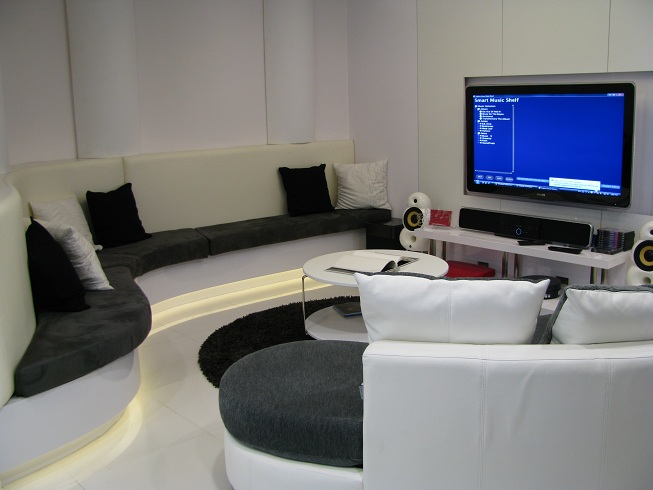
STARhome is a smart home program initiated by A-STAR. I used to work with STARhome, a smart home filled with many many latest technologies, many of which are not yet available in the market.
We had technologies like face and voice recognition which can
authenticate its owner and automatically open the door for you.
Automated news/sports video indexing, which segment out the clip that
you are interested to watch. Voice/gesture command or mobile phone to
control the lighting and appliances. Robot that listen to your command
and serve you a cup of freshly brew coffee. Tracking your location in
the home, streaming your favorite music where ever you go. Keeping
track of your groceries inventory, so that you will never run out of
your favorite food. A real time language translation device which helps
translate any speech to Mandarin for my grandmother at home who is
unable to understand an English speaking sales-person. A
bed/chair/toilet bowl that keeps track of sleeping pattern and health
condition. Video/Audio surveillance system which is able to detect
elderly/children fall, or any other activities at home, notifying the
home owner events that they are interested in. Self sustaining and
maintainence aquarium (fish tank). A platform where smart devices
communicate with one another within a home. There are many more smart
little gadgets.
We have collected our experience working and living in a smart home and managed to build another one, STARhome@fusionopolis.
These technologies may seems science friction, but are already
possible. They are however still not within the reached of common user
like you and me. Having the opportunity to work in STARhome
has provided me some insight to what a smart home means to me. A smart
home that is affordable, simple and easy to use. Just like how a
washing machine came into our home.
Most
home automation that I have seen and worked with in the market are
quite impressive and contains a lot of functions. However they do not
meet the smart home definition that I have in mind. Affordable, simple
and easy to use. Many smart devices that are available in the market
are suppose to make our life easy, but very often, I find it is even
more difficult to setup and use. Even a television set that has been
evolving for decades, seems more and more complex to use. The number of
buttons are growing on the remote control, the functions are getting
difficult to set.
Compare to an old television, the
television now has more functions, but requires more steps to get a
simple task done. Very often, I will have to help my parent and elderly
to setup or even use the new television. The elderly may have aged, but
they can still manage simple old appliances which are easiler to use.
Innovation
like a thermo flask has once overwhelm me. There is a time when I spent
quite a long time trying to figure out how to get the hot water out of
the flask for my cup of 3-in-1 coffee. There was so many buttons on the
flask and they have really confused me, making me looking like an idot.
Making an electronic engineer who is working with the latest
technologies, looking like an idot. The old mechanical thermo flask has
only two button at most. One big push button on the top of the flask to
pump out the hot water, and another one to lock the pump (for safety in
case children play with the flask and get themselves scalded).
Most
of the high tech stuffs reallys piss me off, because they are not
designed for wonderful user experience; it is design for the seek of
looking high tech. The experience has rised my awareness for a better
user experience.
I would like to delicate this
page to talk about the stuffs that I would like see in a automated
home. Pros and cons of the existing concept of smart home gadgets
available on the market. Also important things to take note when
building your dream home in Singapore. Many interior designers and
contractors are still green in the area of home automation, so it is
important to know what you want to look for in your home. It is you who
are living in your home after all.
Structured Wiring
Smart
home automation is becoming part of our home utilities, and it is
important to design the infrastructure of your home to cater for the
coming technologies trend. Provision wiring to meet future demands can
save you cost.
The reason for provisioning the
infrastructure is to avoid re-laying the cables. It is unlikely to have
any further changes to the wiring, the access to the cable trunking
should still be accessible. You can hide the cables but try not to seal
it. Maintenance is necessary at times.
Structured wiring or cabling is a set of standard to lay the cable
infrastructure, to ensure that interference is minimum. There are a few
types of cable services that we can have in our home.
– AC Power 110-230Vac
– Digital data (Network, broadband)
– Analog signal (TV RF antenna, telephone line, Audio/Video)
The digital data and analog signal cable should be laid a distance of
about 60mm away from the AC power line. This is to prevent noise from
the AC power to be coupled over to the cables carrying digital and
analog signal, especially when they run in parallel. It is also good to
have the signal cables shielded to minimise the interference.
Sometimes when you switch on and off our electrical appliances or
lights, you may notice that your television or radio can get disturb.
For new television set, your may notice that the picture gets halt for
a split seconds. The spark generated from the switch get coupled into
the line. There will be no spark when the AC is at its zero crossing
when it switched, but the probability is low being about to switch near
the zero crossing period. A soft switch or electronic switch can
minimised such spark, generating less noise.
When the AC power line and signal cables has to laid parallel to each
other, it is good to keep them at least a distance of 60mm apart.
Cables section that are not in parallel have less interference effect
compare to those in parallel.
Label of the cables is a good practice which minimise any inconvenient
in future. Contractors do not bother to label the cables, because they
are able to remember and managed them. As more and more cables are laid
over the years, it can get more and more messy. Future contractor will
have a hard time tracing the cables. It is always good to label the
cables especially for structured wiring because there will be more
variety of wiring which are more complex than before.
In Singapore, structured wiring can often be found in office and
factory buildings, but is not adopted for home use. It is still a
relatively new things for the home industry.
The typical wiring infrastructure that are adopted in our Singapore home are mainly:
– 230Vac cables (40-60A for HDB flats)
– TV RF/antenna cable
– Telephone cable
Fiber optic cable is available but not a popular choice. This is maybe due to the cost compare to other options.
In older homes, TV and telephone cable services are laid only to the
living room;only the power cable is available at each room. Today with
cheaper electronics products, consumers have the luxury to have more
than one appliances in the same house. Each home is expected to have
more than one telephone and television. It is now a common trend to see
the TV and telephone cable laid to every room.
As technology evolve, the trend is starting to change. According to the
statistic of Singapore 2012, there is a declining trend of household
subscribing to the telephone line. This may be due to the popularity of
personal mobile phone; at about 1.5 mobile phone per person. There are
also new digital phone services which uses broadband to deliver voice
call instead of analog phone line; the service is cheaper compare to
the telephone line.
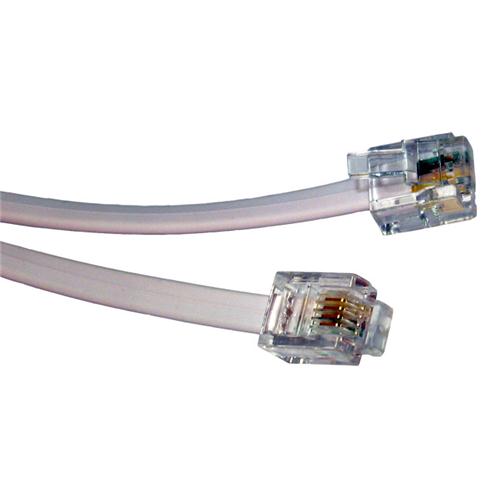
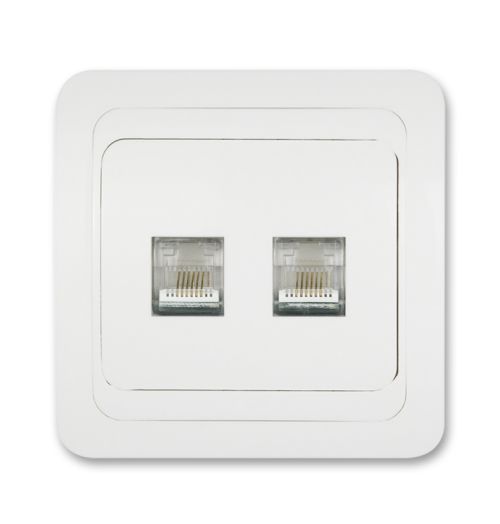
RJ11 (6pins) socket for telephone line (old type)
RJ11 (6pins) socket for telephone line (UK wall panel)
Recommended UK wall panel RJ45 (8pins) socket which is suitable for
network (RJ45 jack) and telephone line (RJ11 jack) use, RJ45 jack
Telephone
line is is declining. Every individual has at least a mobile phone.
Telephone line (land line) that already installed are declining slowly.
Most young family prefer not to install a new telephone line, as they
are contactable through their mobile phone number.
Telephone
line may seem to be outdated, but I will still recommend the
installation of infrastructure to support it. The recommendation is to
install network cables instead of telephone cables. Network cable is
able to host a number services like Ethernet, telephony, audio and
video. This makes it a very flexible infrastructure to have.
Telephone lines do still have its unique advantages, compare to other
new alternatives. Telephone line is linked directly from the phone
exchange centre. The analog telephone do not requires additional power
in order to work because the power comes from the telephone exchange
centre. This means that in times of electricity failure, your analog
phone will still works. Using a IP phones requires broadband internet
and needs to be powered up from your wall power socket outlet. Using a
mobile phone requires battery power. The number of mobile connection is
also limited with a wireless cellular network. Power or internet
connection failure will means that you will not be able to make call..
Not every household will want to install telephone line, but most will
need network access in this information technology era. A recommended
advise will be to laid network cables instead of the telephone lines.
Network cables have 4 wire pairs which can be used for network as well
as telephone purpose. Whether or not you will be using a telephone
line, it is good to lay network line.
The network cables can support both the network and telephone services.
RJ45 (8pins) socket is used for network cables, while RJ11 (6pins)
socket is used for telephone lines. It is recommend to use a RJ45
socket, which RJ11 jack can also plug in.
The network cable has a number of grades indicating how the cable is shielded as follows,
CAT5 – no shielding
CAT5e – shielding over the cable (recommended)
CAT6 – shielding over each of the 4 twisted pair
CAT7 – shielding over the twisted pair as well the the cable
Laying
CAT5e for the home will be more than good enough, for its performance
and price. CAT7 will definately be too much. Installation using CAT6 or
CAT7 cables can be quite difficult for a home, as the wire is usually
thick which is difficult to install. CAT5 provide no shielding which
performance can be degraded when it is laid near any noisy wires or
devices.
The cables should be laid from each point to a
central location where your network equipment (router) is likely to be
placed. In a typical Singapore home, it will be either at the
electrical box, or besides the TV console in the living room. It is
recommended to lay 2 sets of cables for each location. The spare cables
be use for telephone line or spare network lines, audio/video signal
future use. You will never know when you will need it. It is better to
provision extra cable which is cheap, compare to a wireless solution
which is expensive and poor in quality.
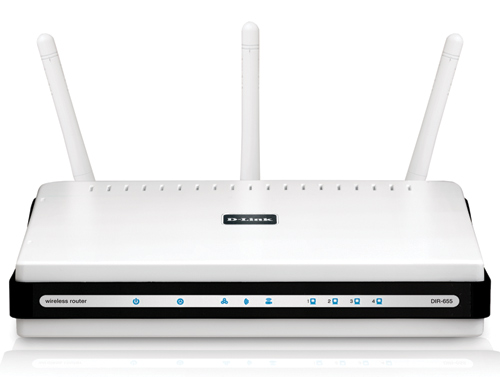
DLINK DIR-655 WiFi router
A
popular alternative to using network cables is wireless. Wireless
network is convenient and easy to install, especially for existing home
where it is difficult to lay new cables. Many consumers prefer to rely
on wireless technology for their network services. Wireless tends to
use more power and have limitation in the coverage they can support.
The wireless signal can cover a distance of 30-50m under open space.
The signal will find it hard to penetrate Singapore HDB flat, reducing
the distance to about 10-15m. Many of my neighbors are also using WiFi
in their home. At the time I am writing now, my WiFi dongle is able to
detect 36 WiFi station. WiFi has a limited bandwidth over the air
medium. With this limited channels across the air sharing with sharing
with the desktop and laptop, the communication can be slow and drop
connection can often occurred. There is also a higher possibility of
being hack, compared to wired network. As far as possible, physical
cable is still my preferred choice.
There are
reports which indicate that wireless can cause health hazard. For
consumers who are sensitive to radio frequency exposures, they may find
it more comfortable with wired network. The same theory applies to the
cellular phones. Many research have been produced with respect to these
danger.
For me, I do still use it, but will try as much as possible to avoid it.
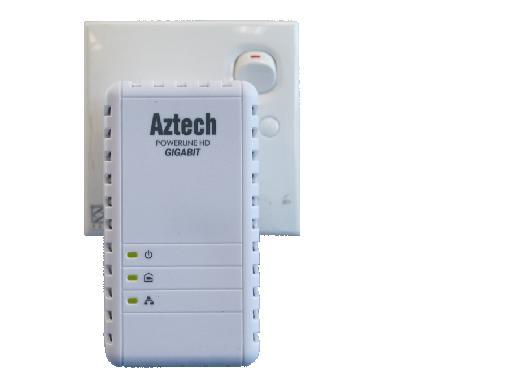
Aztech power line communication modem
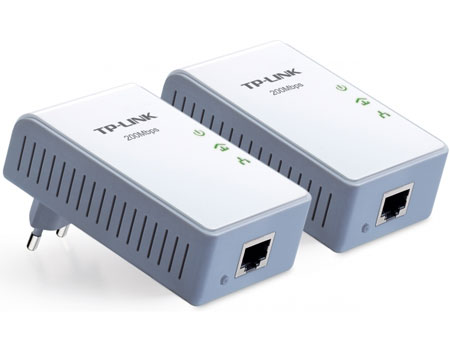
TP-LINK PLC modem
Power
line communication is also a popular choice. The network communication
is done with the house existing power line. The communication is done
within the home power line. Similar to WiFi, it is useful if it is
troublesome to lay new wiring.
Wired ethernet network is still the best.
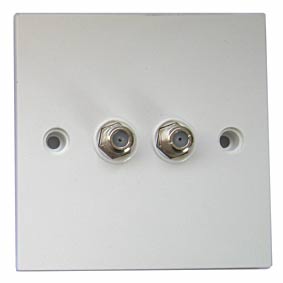
RF
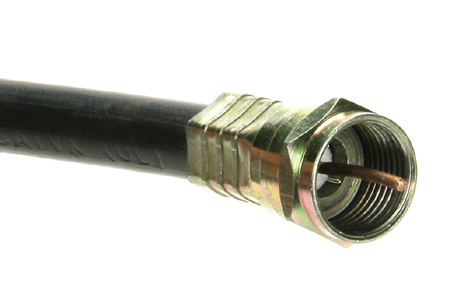
RG6 F81 (F type connector)
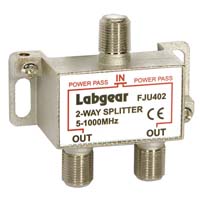
RF splitter (1 in, 2 out)
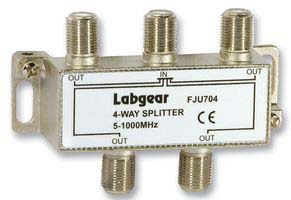
Multi RF spliter(1 in, 4 out)
F type cable
try not to split more than 2 split.
centralised multiple split is preferred, in case any thing happen in future, it is simpler to reticfied.
don’t have to over tighten the connector to the socket.
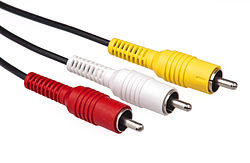
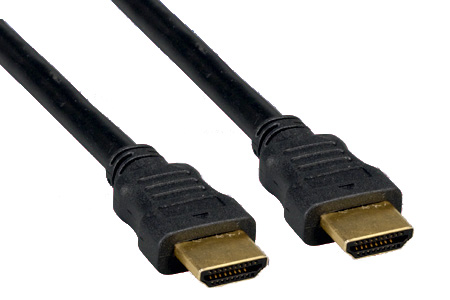
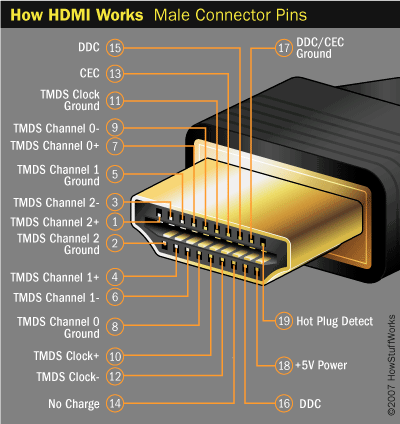
Video/Audio analog signal or HDMI cables
RCA max distance, HDMI ma distance
Smart Features
Green and Efficient
Useful Home Gadgets
Devices that make your home look smart.
available from
Remote on/off applicances using any IR handheld remote controller.
Application: Using your TV remote control to switch all other entertainment system to save on the standby power consumption.
Using your TV remote control to switch on your wall plugged electrical fan or lamp.
available from
Night lamp, which automatically glows in the dark.
available from
Digital timer to on and off appliances.
Able to select individual day/time in a week to on/off appliance.
Switch
on network router or entertainment system during the day and switch
them off at night. Switch on boiler or cooker at a particular time of
the day, so that you can enjoy on time when you can back from work.
available from
Wireless Power Monitoring.
Monitoring your home energy usage wirelessly.
Keyword: Smart home, home
automation, intelligent home, DIY smart home, affordable, efficient.
Simple and easy to use Singapore home.
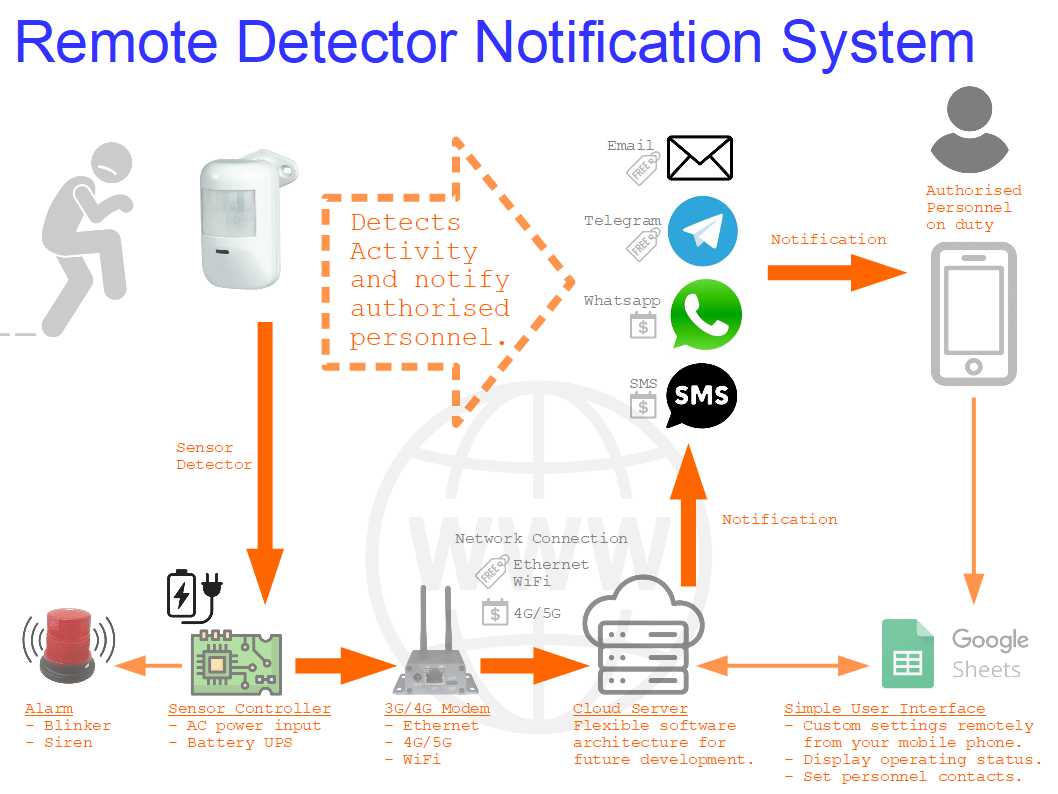
The Remote Detector Notification System is a smart security solution that instantly detects unauthorized movement and alerts your team in real time. Whether it’s at a jetty, warehouse, factory, or restricted zone, this system ensures you never miss a threat.
Remote Notification System Architecture
Smart Perimeter Security with Instant Alerts
The Remote Detector Notification System is designed to safeguard sensitive areas such as jetties, company boundaries, and other high-security zones. Using motion detection and instant notification technology, the system ensures authorized personnel are alerted the moment an intrusion occurs.
✅ Why Choose Our System?
Instant Alerts – Get notified the moment motion is detected.
Multi-Channel Notifications – SMS, WhatsApp, Telegram, or Email.
Up to 10 Recipients – Alert your whole security team at once.
Customizable Messages – Set your own words for every alert.
Reliable Hardware – PIR sensor, blinker, and siren integration.
Cloud-Ready – Manage, monitor, and update remotely.
Flexible Power – AC input, battery backup, and solar panel options.
🌟 Perfect For
Coastal security & jetties
Industrial facilities
Warehouses & storage yards
Remote locations without CCTV
Perimeter protection for restricted zones
💡 Key Benefits
Simple – Easy to set up and operate.
Scalable – Add more users and locations as needed.
Cost-Effective – Low monthly subscription fees.
Future-Proof – Cloud-based design adapts to new messaging apps.
🔍 How It Works
Control – Adjust settings anytime via cloud software. Detect – PIR sensor picks up intruder movement. Deter – Siren and blinker activate instantly. Notify – Customized alerts sent to your team’s phones.
PIR Sensor Detection
The Passive Infrared (PIR) sensor detects movement across the secured boundary.
Alarm Activation
Connected blinker and siren trigger immediately to deter intruders.
Notification Delivery
The system sends a customized message alert to up to 10 mobile numbers, notifying personnel on duty.
Flexible options also include Email, Telegram, WhatsApp or SMS notifications.
Cloud Software Control
Remote configuration and monitoring through a simple user interface (Google Sheet).
Allows customisation of recipient contact numbers, customizing SMS content, and checking device status.
The PIC‑WEB32 is a high-performance Ethernet I/O controller purpose-built for industrial and automation environments where stable, networked dry contact control is essential. Featuring a rugged, fanless aluminum enclosure and wide operating tolerances, the PIC‑WEB32 integrates easily into existing infrastructure with both web-based management and enterprise-level protocol support.
Engineered with IP40-rated protection and designed for DIN-rail or wall mount installations, this versatile controller ensures consistent operation under harsh electrical and environmental conditions.
🌐 Network-Ready for Smart Control Applications
Featuring pluggable terminal connection for easy connection.
With support for 32 digital input/output (I/O) channels, the PIC‑WEB32 delivers precise, low-latency relay control. Each I/O can function as a dry contact or pulse-enabled wet contact interface, making the unit adaptable for a wide range of automation and remote monitoring scenarios.
Equipped with two independent Ethernet ports (10/100 Mbps), the controller supports dual MAC and IP addresses, offering network redundancy or segmentation for mission-critical operations.
Whether for smart buildings, legacy equipment bridging, alarm management, or SCADA systems, the PIC‑WEB32 streamlines Ethernet-based I/O expansion across your facilities.
🔧 Key Technical Features
Processor & System: Industrial-grade ARM9 processor @300 MHz running embedded OpenWRT Linux for stability and upgradability.
Ethernet & Protocols:
Dual 10/100 Mbps ports with Auto-Negotiation & Auto-MDIX crossover detection
Protocol support includes: Modbus TCP, TCP/UDP Server & Client, HTTP, SNMP, Telnet, SSH
Digital Input/Output:
32 independently configurable I/Os
Dry and wet (pulse) contact supported
Status LEDs for each I/O line
Management Interfaces:
Accessible via Web GUI, Telnet, SSH, and Windows configuration utility
SNMP supported for enterprise monitoring systems
Power Supply:
Accepts wide voltage range: DC 12–55V or AC 12–40V
Built-in surge, overload, and reverse-polarity protection
Supports redundant power input
Mechanical & Environmental:
IP40 anodized aluminum casing
DIN-rail or wall mount compatible
Fanless, passive cooling for noise-free operation
Operating Temp: −40°C to +85°C
Humidity: 0–95% RH (non-condensing)
MAC & Interface Standards:
Fully compliant with IEEE 802.3 Ethernet standards
RJ45 connectors with dynamic MAC address learning
🧩 Where It Fits In
The PIC-WEB32 is ideal for systems where networked dry contact inputs/outputs are needed with high reliability:
🏢 Building automation
🚨 Alarm trigger systems
🏭 Factory floor control panels
🌐 Remote I/O over TCP/IP
🧠 Intelligent relay expansion for PLCs or SCADA systems
Setup Connection
These are some illustration of a typical connection setup.
Typical connection setup for a single server
Paired server setup connection
💬 What Customers Say
“We were able to migrate our legacy relay panels into a smart Ethernet system with the PIC‑WEB32. Reliable, compact, and easy to manage.” — Systems Engineer, Building Infrastructure Solutions
“Plugged it into our Modbus TCP network and had all contact signals online in minutes. Excellent industrial controller.” — Automation Manager, Precision Manufacturing
✅ Contact Us
Experience the power of streamlined industrial control with the PIC‑WEB32. 👉 Contact Us Today
Machine Safety Sensors – Protect Your People. Secure Your Production. Ensure Maximum Safety with Reliable Machine Safety Sensors Industrial environments are full of potential hazards. Our advanced machine safety sensors provide the protection your team needs while maximising uptime and productivity. Whether you run an automated factory, a warehouse, or a logistics hub, we help you stay compliant, reduce accidents, and operate with peace of mind.
Why Choose Our Machine Safety Sensors?
Comprehensive Protection: Detect unsafe conditions before accidents happen.
High Accuracy: Fast, precise sensing—even in harsh environments.
Easy Integration: Works seamlessly with all major machinery brands.
Fail-Safe Design: Redundant safety features ensure maximum reliability.
Compliance Ready: Meets ISO 13849, IEC 61508, and CE safety standards.
Our Sensor Types
Safety Light Curtains Create invisible barriers to instantly stop machines when crossed.
Emergency Stop Buttons Large, high-visibility E-stops for immediate shutdowns.
Safety Laser Scanners Monitor complex zones with configurable detection fields.
Safety Interlock Switches Ensure guard doors stay closed during operation.
Safety Mats Detect presence with pressure-sensitive flooring.
Industries We Serve
Automotive Manufacturing
Electronics Assembly
Food & Beverage Processing
Warehousing & Logistics
Packaging & Bottling
Factories & Warehouses
Construction Sites
Logistics Hubs
Offices & Commercial Buildings
Laboratories & Workshops
Empower Safer Workplaces with Safety Guard Sensor
Smart Safety Compliance. Total Peace of Mind. Make workplace safety effortless with Safety Guard Sensor—the all-in-one platform that helps you achieve, maintain, and prove your commitment to a safe and productive environment.
Discover the Guard Sensor Advantage
All-in-One Safety Management Platform
Automated Digital Checklists.
Simplify daily and weekly safety inspections with smart checklists tailored to your operations.
Live Sensor Monitoring
Install wireless sensors at key locations—get real-time insights on machinery status, hazardous zones, emergency exits, and more.
Instant Safety Alerts
Receive notifications directly to your mobile or desktop if conditions deviate from your safety parameters.
One-Click Compliance Reporting
Generate professional, audit-ready safety reports at any time—perfect for management review or stakeholder updates.
Employee Training Hub
Give your team access to interactive safety modules, track their progress, and reinforce a culture of safety.
Maintenance & Incident Tracking
Log hazards, schedule maintenance, and track incident responses for full transparency.
See Our Sensors In Action
Safety Light Curtain Installed on Conveyor
A slim, yellow safety light curtain mounted on both sides of a conveyor, with bright
indicator LEDs and a hand reaching near the detection zone.
Emergency Stop Button Close-Up
A large red emergency stop push button with a yellow background, clearly labelled for quick access on a machine control panel.
Safety Laser Scanner Monitoring Robot Cell
A compact safety laser scanner mounted near the base of an industrial robot projects a visible safety zone on the floor.
Guard Door Interlock Switch
A heavy-duty metal interlock switch is installed on a safety gate, with clear locking mechanism and status indicators.
Contact Us
Protect Your People. Safeguard Your Equipment. Ready to upgrade your machine safety?
Stay Safe. Stay Efficient. Your safety partner for smart industry.
Looking to make your business more efficient and never miss a sale?
Our PayNow Payment Notification System is the perfect solution for small businesses in Singapore!
Here’s what makes it a game-changer:
Instant Alerts
Real-Time Notifications
Seamless Integration
Easy Setup, Easy Use
Better Cash Flow
Secure and Reliable
Easy Recordkeeping
No Extra Apps Needed
Instant PayNow Payment Alerts
Get notified the moment a customer pays you via PayNow—no more checking your bank app, waiting for payment confirmation, no more guesswork or missed transactions. This device will announce the payment amount that you have received in real time, loud and clear. You get to know that every sale is successful
Real-Time Notifications for Every Sale
Stay updated with real-time alerts right at your countertop or cashier’s desk. No need to check your phone or bank app—our device does the work for you.
Secure & Seamless Integration with Your Bank
Seamless Integration: Our system integrates smoothly with your PayNow bank setup. Once you’ve registered your business account with PayNow through your bank, our notification system connects directly to your bank’s payment gateway to deliver real-time payment alerts automatically. Ensuring all your payments are safe, recorded, and easy to track. No extra hardware or complicated software needed!
Easy Setup, Easy Use
Just place the compact device on your counter, display the PayNow QR code, and start receiving instant alerts. It’s perfect for retail stores, cafes, and market stalls.
Better Cash Flow
With real-time notifications, you can process orders, deliver goods, or provide services immediately, keeping your customers happy and your business running smoothly.
Secure and Reliable
Built on Singapore’s trusted PayNow infrastructure, every transaction is safe and protected by your bank’s security systems.
Easy Recordkeeping
Each payment comes with a clear notification, making it simple to track sales and reconcile your accounts.
No Extra Apps Needed
Customers pay using their own banking app—no new downloads or training required.
Upgrade your business today with our PayNow Payment Notification System—fast, secure, and designed to help small retail store, cafe businesses like yours grow!
Empowering Small Businesses
With “Empowering Small Businesses with Smart Payment Alerts” as our promise, you’ll join a growing community of savvy business owners enjoying hassle-free, cashless payments.
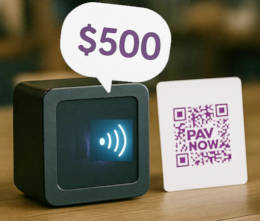
PayNow Payment Voice Announcer Device
A sleek, compact notification device placed on a countertop or cashier’s desk.
Display a visual cue on the device such as a glowing light or sound wave icon to symbolize instant payment alerts.
Show on a smartphone screen with a PayNow payment confirmation or notification popping up, reinforcing the instant alert feature.
What our customer says about this product.
“Instant PayNow Payment Alerts”
“Real-Time Notifications for Every Sale”
“Secure & Seamless Integration with Your Bank”
“Empowering Small Businesses with Smart Payment Alerts.”
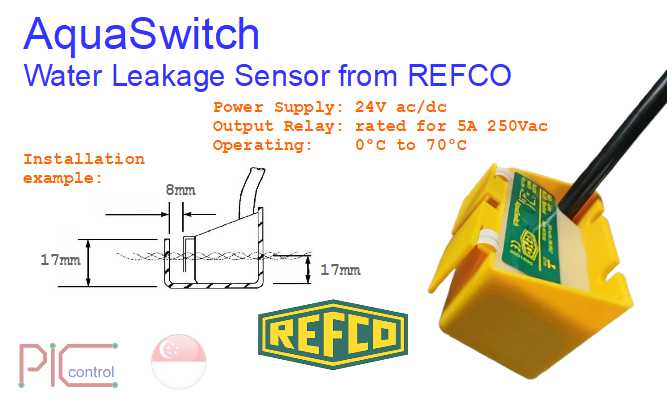
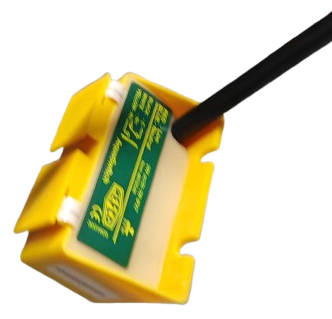
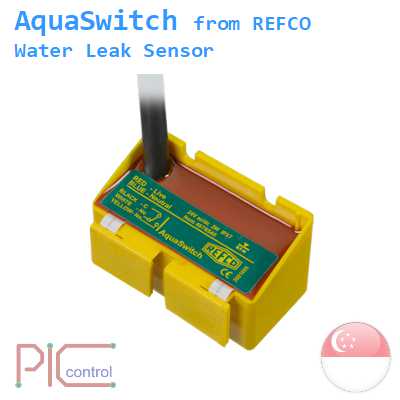
The REFCO AquaSwitch Aircon Water Leakage Sensor is a specialized electronic device designed to detect water levels in air conditioning units, thereby preventing potential water damage due to leaks (or aircon condensation).
AquaSwitch water leakage sensor
This sensor is particularly useful in environments where air conditioning systems are prevalent, such as commercial buildings and server rooms, where water leakage can lead to significant operational disruptions and costly repairs.
Overview of AquaSwitch
The AquaSwitch operates using solid-state electronic sensing technology, which is not affected by oil films or metal surfaces. This feature enhances its reliability in various installation scenarios. When water comes into contact with the sensor, it triggers a relay output that can activate alarms or pumps, ensuring immediate response to potential leaks.
Key Features
No Moving Parts: The AquaSwitch is designed without mechanical components, reducing the risk of wear and tear and increasing longevity.
Relay Output: It provides a dry contact switch output that can be easily integrated into existing alarm systems or control panels.
Versatile Installation: The sensor can be mounted in various locations, such as in the water tray of an air conditioning unit or at specific heights to monitor water levels effectively.
User-Friendly: The installation process is straightforward, making it accessible for both professional technicians and DIY enthusiasts.
Applications
The AquaSwitch is particularly effective in:
Air Conditioning Units: It helps monitor condensation trays where water accumulation is common.
Server Rooms: Given that air conditioning failures can lead to overheating and equipment damage, the AquaSwitch provides critical early warnings of leaks2.
Industrial Settings: In environments with extensive piping and machinery, the sensor aids in maintaining operational integrity by detecting leaks before they escalate into larger issues.
Advantages
The AquaSwitch offers several benefits:
Early Detection: By alerting users to leaks promptly, it helps mitigate damage and repair costs.
Peace of Mind: Users can operate their systems with confidence, knowing that potential water issues are being monitored continuously.
Cost-Effective Solution: The initial investment in an AquaSwitch can save significant amounts in potential repair costs due to water damage.
The REFCO AquaSwitch Aircon Water Leakage Sensor is a reliable and efficient solution for detecting water leaks in air conditioning systems. Its advanced technology and user-friendly design make it an essential tool for maintaining the integrity of HVAC systems across various applications.
Buy AquaSwitch here.
SGD$ 295
Click on this buy button to purchase. 24V ac/dc model.
or Contact our sales for ordering of AquaSwitch water leakage sensor.
The reason I am doing this page is because I find development work using SEGGER IDE is really painful. It is really not a fun IDE to work with. Maybe in future, it will be better. But for now, I have a project to do, and I cannot spending time on a lousy development environment, knowing how fast it would be using a good IDE platform.
It is fortunate enough that a kind soul had developed a “GNU ARM Eclipse plugin” for development of ARMS firmware, currently supprted and maintain by Liviu Ionescu. While SEGGER does not support this plugin, it is recommended by them for developer who refer to use a better development environment for their programming. https://www.segger.com/products/debug-probes/j-link/technology/ides/eclipse/
The only disadvantage is that the developer would not be able to use the SEGGER debugging function. Being a developer, I seldom find the need to use a debugger, nor I understand how important a hardware debugger is. I don’t find it very useful so far, and managed to turn out many projects without using it. Perhaps there is a better purpose of using a debugger that I did not understand.
This is my attempt to setup Eclipse IDE for ARM Cortex firmware development work. I hope this works as it can increase my productivity tremendously. I really have a lot of blocks using SEGGER IDE, after working with many better other IDE products.
Setting Up Eclipse IDE for ARM Cortex Microcontroller development work.
Download and install the Eclipse IDE. (for C/C++ Developers)
Open the Eclipse program, go to the menu Help -> Eclipse Marketplace…
Search for “GNU MCU Eclipse” plugin, or go to this page https://marketplace.eclipse.org/content/gnu-arm-eclipse to drag the install button onto the Eclipse Marketplace dialog box. Click the <Confirm> button to install the plugin.
Looking for a simpler solution to send keyboard key stroke for data entry or control a computer like a HID keyboard device?
Check out this UART to USB Keyboard Wedge IC chip. Simply send your ASCII character via the UART communication, it will automatically be converted to a USB HID keyboard key stroke to your computer device.
Application
Development of application to send keyboard stroke to computer.
Data entry of scanned items onto a spreadsheet.
Make your customised device works like a barcode scanner





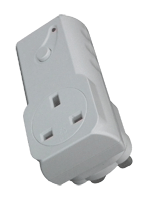 available from
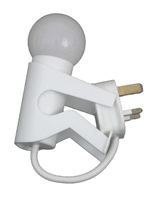 available from
  available from
 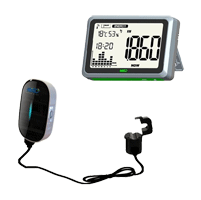 available from